- PICKLEBACKCLUB
- Posts
- 🌬️ Windy Courts? Good.
🌬️ Windy Courts? Good.
Master outdoor pickleball when Mother Nature has other plans.

PICKLEBACK CLUB
March 31, 2026
In partnership with

Men, Say Goodbye to Eyebags, Dark Spots & Wrinkles

Reduce eyebags, dark spots and wrinkles with the first of its kind anti-aging solution for men.
Based on advanced dermatological research, Particle Face Cream helps keep your skin healthy and youthful, ensuring you look and feel your best every day.
Get 20% off and free shipping now with the exclusive promo code BH20!
Hey Picklebackers! 🏓💨
Windy courts. Empty parking lots. Half the players heading home.
Not you.
Because this is where the game gets interesting.
This is where soft hands beat power, patience beats ego, and the players who adapt start stacking wins.
If you can learn to play in the wind, you can play anywhere.
🌀 Understand the Wind Before You Serve
The first step to winning in the wind is awareness, not frustration. Before the game even starts, do a quick wind read:
Which direction is it blowing — headwind, tailwind, or crosswind?
Is it steady or gusting unpredictably?
How does it affect the ball at different heights?
Take a few practice rallies just to feel it out. Players who skip this step spend the first three games playing catch-up. Don’t be that player.
Why it matters:
Wind plays differently depending on where you’re standing on the court. With a tailwind at your back, lobs will fly long. Into a headwind, your drives may die at the net. Knowing this before the rally starts puts you one step ahead.
🎯 Adjust Your Shot Selection — Immediately
This is the big one. Wind is not the time to be a hero.
Play lower. Play slower. Play smarter. Dink more.
Low, controlled dinks hug the net and stay out of the wind’s reach. A well-placed dink at ankle height is almost immune to gusts.Use the wind, don’t fight it.
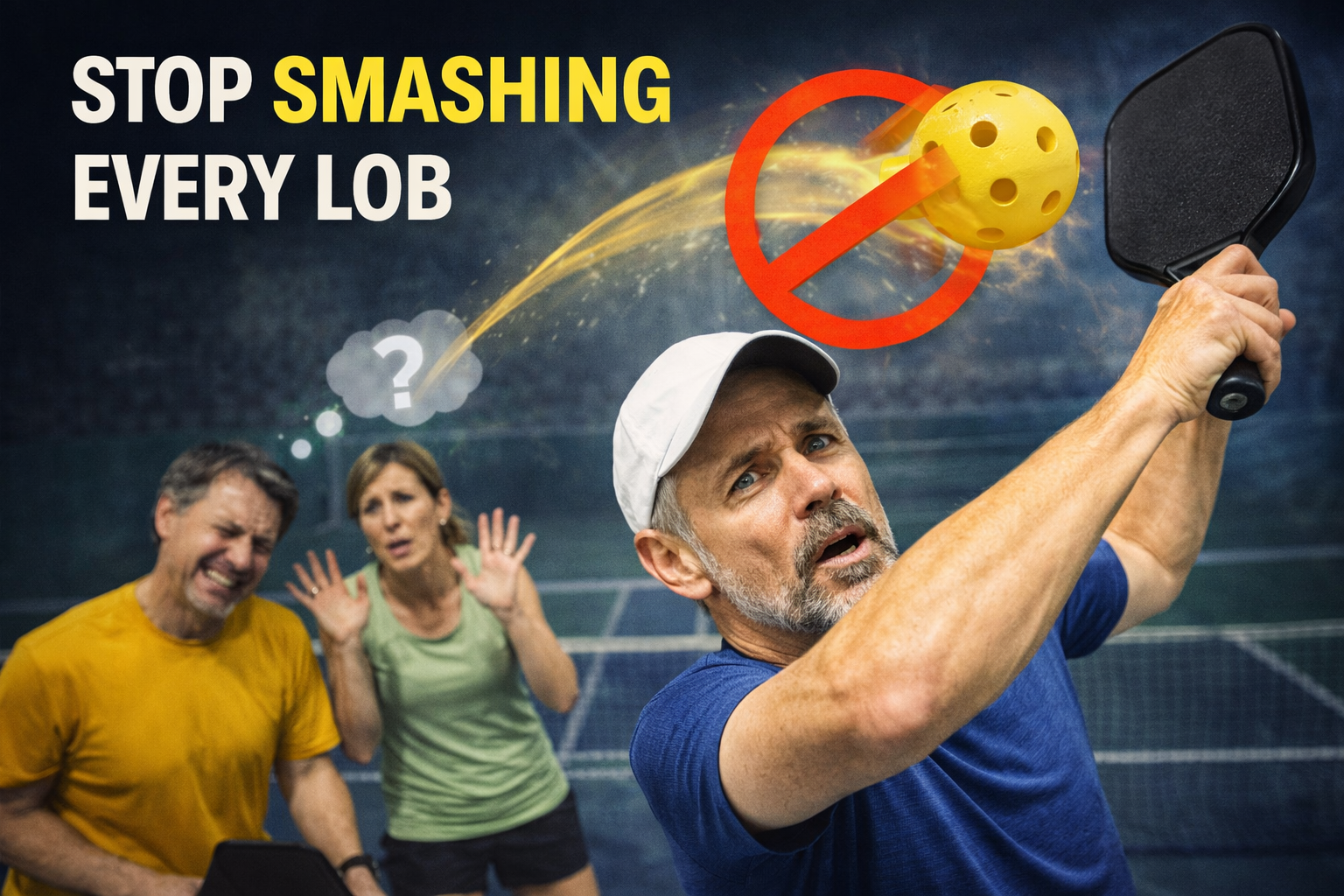
If the wind is at your back, lay off the pace — the wind is doing the work for you. If you’re hitting into a headwind, add a little more oomph.Drop the lob (mostly). Lobs in the wind are a gamble.
A crosswind can turn a beautiful offensive lob into a gift to your opponent. Use them sparingly and only when you’re certain of the direction.
Player takeaway:
Shots that stay low are your best friends. Windproof your game by keeping the ball below knee height as much as possible.
🏃 Move Your Feet More Than Usual
Wind affects the ball’s trajectory in ways that look normal — until they’re suddenly not. A drive that looks like it’s heading straight at you might float a step to the left. A short ball might carry further than expected.
The fix? Stay on the balls of your feet and give yourself extra reaction time.
Don’t camp out in one spot assuming you’ve read the bounce correctly. Stay light, stay ready, and be willing to adjust mid-step. Wind rallies reward footwork and punish flat-footedness.
🧠 The Mental Game Is Half the Battle
Here’s what nobody tells you: your opponent is struggling with the wind too.
When a shot goes wild or a serve clips the net unexpectedly, it’s easy to spiral. Don’t. Reset between points, breathe, and remind yourself that the conditions are equal for both sides of the net.
Wind matches are won by the team that stays composed the longest — not the team with the hardest drive or the most spin. Patience is a weapon. Use it.
Why it matters:
Frustration leads to riskier shots, which leads to unforced errors, which leads to a loss you didn’t have to take. Stay even-keeled and let your opponent unravel first.
⚙️ Gear Check: Small Tweaks, Big Difference
A few quick adjustments before and during play can make a real difference:
Grip pressure: Wind can push the paddle unexpectedly at contact. Firm up your grip slightly to maintain control.
Ball choice: If you have options, choose a heavier or slightly softer outdoor ball. Lighter balls become pinballs in a strong wind.
Serve placement: Aim for body serves in heavy wind — they’re harder to mis-read and give your opponent less room to attack.
💪 The Tip of the Week
Serve into the wind with extra topspin. A topspin serve dips faster than a flat one, meaning the wind has less time to mess with its path. It’s a reliable weapon when other serves are going rogue. Practice it this week — you’ll be glad you did the next time things get breezy. 🌬️
Most players wait for perfect conditions.
You’re building a game that doesn’t need them.
Next time the wind kicks up, you won’t hesitate — you’ll adjust, settle in, and take control of the court.
That’s how real consistency is built.
Stay low. Stay calm. Stay on the court. See you out there. 🏓🥒
Dill-lightfully yours,
Your PICKLEBACKCLUB Team 🥒🎾